It’s a weird week. Twitter is (possibly) entering a slow death march and much of my community is reluctantly slouching over to Mastodon. I’ve started cross-posting there as well: indieweb.social/@maggie . The Elon-escapades only drive home how important it is to own and control the platform you’re publishing to. Which means writing on your own website first and cross-posting to external platforms. The IndieWeb community has a catchy acronym for this: POSSE . Publish (on your) Own Site, Syndicate Elsewhere.
I still don’t have a Twitter-like stream setup on this site, but I’m working on it. Tools like WebMentions and Bridgy are going to do a lot of the heavy lifting. I’m having trouble finding many tutorials or guides on how to do it though – perhaps another case of writing the piece you want to read.
I’ve been working at Ought since late August. The London ↔ SF time difference is a bit crap, but I can’t say enough good things about my fellow Oughters 🦦. It’s rare and special to work alongside such thoughtful and ambitious people. We’re in the middle of designing and prototyping some wildly different interfaces for Elicit , our AI research assistant and Ought’s main product. Users say they love the current version, but we know it could be so much better.
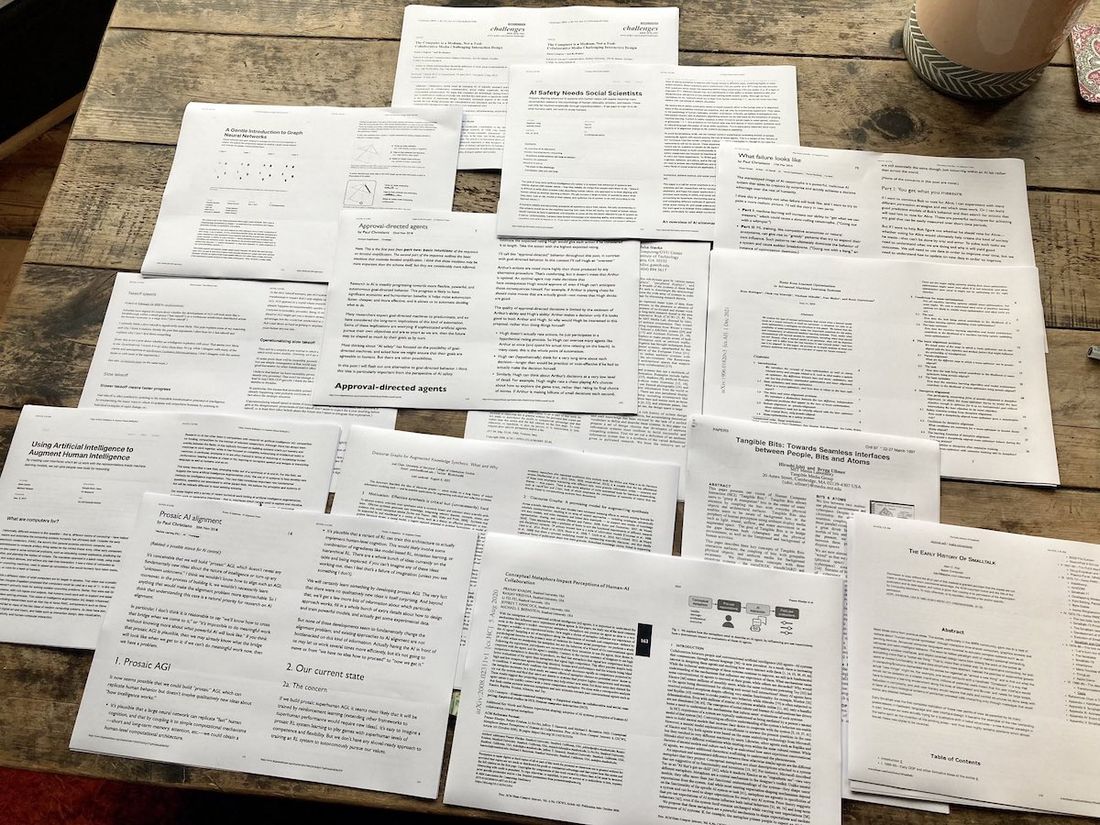
In other news, I bought a cheap, used laser printer and it’s drastically improved my reading experience for long articles and PDFs. Can’t recommend it enough. There are plenty going for £30-40 on eBay and you’ll finally read all those 5000-word blog posts you have bookmarked.
I’ve finally gotten back into a good writing cadence. I recently published Programming Portals
Small, scoped areas within a graphical interface that allow users to read and write simple programmes Command K Bars
Command line bars you can quickly summon with a keyboard shortcut Tools for Thought as Cultural Practices, not Computational Objects
On seeing tools for thought through a historical and anthropological lens Tools for Thought as Cultural Practices, not Computational Objects
On seeing tools for thought through a historical and anthropological lens Tools for Thought as Cultural Practices, not Computational Objects
On seeing tools for thought through a historical and anthropological lens A Brief History & Ethos of the Digital Garden
A newly revived philosophy for publishing personal knowledge on the web