I’m writing this from a homely Jacobean-manor-turned-hotel in the West Country , covered in layers of green vines and circled by centenarian trees, on a rare weekend away. Everything is warm: the late afternoon sun, the mustard armchairs, the dark wooden panels along the walls. I’m three teas deep and have a few hours of quiet to think for the first time in many months.
Over the summer my baby became a rambunctious toddler, barrelling around the house and narrating our lives in his own language. My family bought and moved into our first real home after crappy-rental-hopping for years. I’ve now been on the GitHub Next team for the better part of a year and feel settled.
My husband and I both work full-time, so with a small child and a new house, one that is in fact a very old house, with broken doorknobs, peeling wallpaper, jammed windows, and rising damp that needs to be fixed, we acutely feel the lack of time these days. It’s a stretch to meet everyone’s basic needs and keep the dish piles and dirty clothes from drowning us, let alone fix floorboards. I end up thinking a lot about people married to housewives and SAHMs. And the 1971 classic essay I Want a Wife by Judy Brady. An excerpt:
“I want a wife who will keep my house clean. A wife who will pick up after my children, a wife who will pick up after me. I want a wife who will keep my clothes clean, ironed, mended, replaced when need be, and who will see to it that my personal things are kept in their proper place so that I can find what I need the minute I need it. I want a wife who cooks the meals. I want a wife who will plan the menus, do the necessary grocery shopping, prepare the meals, serve them pleasantly, and then do the cleaning up while I do my studying.”
Turns out my husband and I would also like a wife. But not in the polyamorous sense. In the does-the-invisible-unpaid-household-labour sense. Thanks to an incurable case of feminism, it was never going to be me.
I am genuinely hopeful agents might put a dent in this problem, in the same way washing machines and dishwashers did. While they can’t physically do our chores, I expect we can outsource a good chunk of the mental load to always-on agents like Hermes and OpenClaw : pre-emptively buying the next size of kids’ shoes, planning weekend outings, making menus and ordering the groceries, researching and contacting local roofers, balancing family calendars stuffed with school outings and football matches and work trips.
But for the moment, autonomous agent systems are a PITA to set up securely. The moment you give them access to the necessary tools like your email, calendar, and a debit card, you’ve opened a security hellhole. The amount of context these systems need to be genuinely “smart” in the way a human helper would be is non-trivial to configure, and impossible to do safely. This is a “check back next year” technology.
For the moment we’re resigned to eating lots of cheese on toast and cereal for “meals,” and living in a Montessori-themed construction site. I also think about this hilarious Instagram meme a lot:
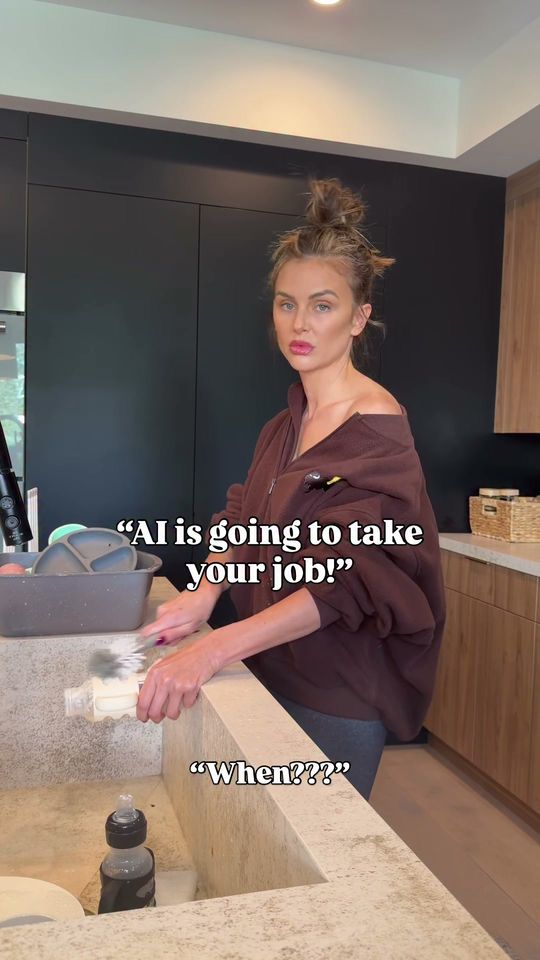
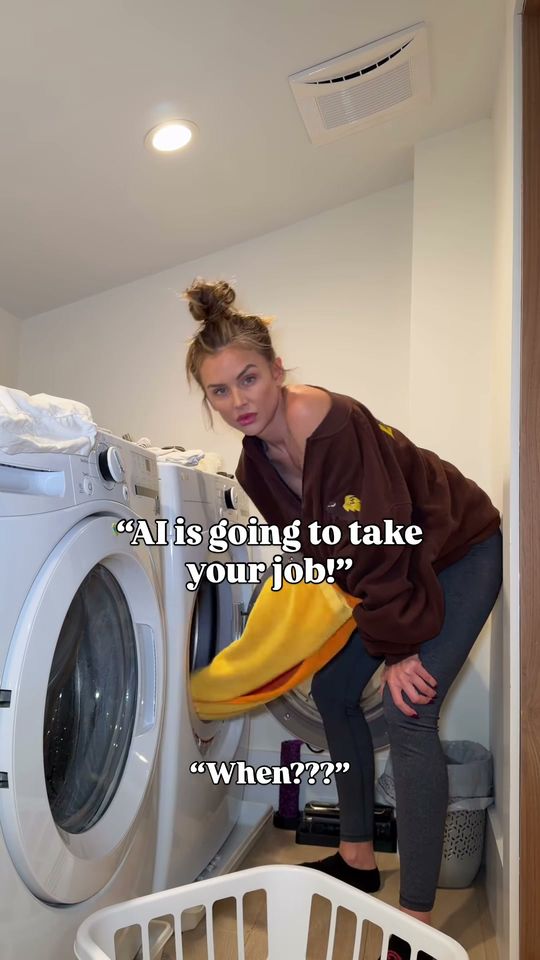
There is much angst in my circles over the impending mass unemployment of humans. There is much concern over what people will do with their time when all the work of the world disappears, reassigned to agents.
What is the work of the world in these conversations? Accounting, sure. Paralegal research. Much of software development. Data entry. Translation. Transcription. Financial advice. Everything listed in these sorts of reports . I’ve no beef with the argument that most repetitive knowledge work is low-hanging fruit for agent labour.
And yet there is so much labour to be done. Obviously, my dishes. Frankly, all of my household tasks. Home maintenance. Childcare. Elderly care. End-of-life care. Social care. Everything that has historically been done for free, by women, unaccounted for in any economic calculations like GDP.
And then there’s the public service labour that everyone would benefit from but has no clear buyer: retrofitting cities to adapt to a changing climate. Installing solar panels and heat pumps. Planting trees and putting up shade covers. Building and maintaining safe bike paths. Farming seaweed for sequestering carbon. Digging a bunch of new reservoirs so my tiny, rainy island doesn’t ironically run out of water .
There is no shortage of physical, social, educational, and cultural work that we need humans to do for one another that cannot, in any wild imagining of agent capabilities, be done by our current or near-future robots. We just can’t figure out how we would pay people enough to do these jobs. There is plenty of need, but not enough ability or willingness to pay. I find myself twisting my small brain into knots and googling basic economic theory trying to understand how we’re going to solve this riddle under modern capitalism. Other than, you know, UBI funded by aggressively taxing tokens.
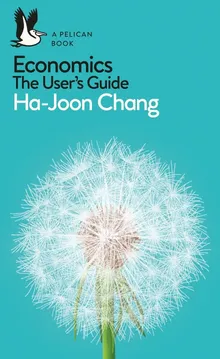
In a very basic bitch move, I’ve started listening to the audiobook Economics: The User’s Guide by Ha-Joon Chang in an attempt to backfill all the economics I never learned and understand more about market dynamics. It feels irresponsible to watch the coming tsunami of AI abundance and not, at least theoretically, understand how it will smash into jobs, wages, and labour. And manifest the permanent underclass we keep hearing about.
Also, while we’re on the topic of domestic labour and women’s economic freedom, I recently read Yesteryear and loved it, just like everyone else. Strong recommend.