There are some books that can make you feel historical horrors as acute, fresh emotions. I recently went in search of one to comprehend the First World War .
For whatever reason, the British international schools I attended didn’t include WWI in the curriculum. They instead took a depth-over-breadth approach by picking very narrow, specific historical events and then making us memorise every last leader, date, battle, city, and negotiation treaty within them. Stripping away any emotional tenor in the process.
I know an exceptional amount about the political logistics of the Holocaust, the Arab-Israeli conflict, the Partition of India and Pakistan, and the American-Vietnam War. And almost nothing about any other parts of history.
I will say these are decent choices, given their relevance to current day events. And for painting a detailed picture of Britain’s brutal colonial history and penchant for drawing straight lines on maps to divide up complex tribal groups and kingdoms that end in bloodshed. But I still could have used a cursory summary of some other sections.
The Crusades. The Tudors. The Stuarts. The Russian Revolution. The Vikings. Imperial China. The Industrial Revolution. The Troubles. World War II events other than the Holocaust. I know only the most sweeping gestures of what happened here, having filled in the blanks with the odd podcast and skimming Wikipedia articles.
But World War I feels like the most egregious oversight.
Until a few months ago, I couldn’t have told you exactly which countries were involved, or how long it went on for. To defend myself a little, I did not grow up in England, but instead bopping around various countries in South East Asia, where there were no red poppies or minutes of silence on Remembrance Day .
But then I went to see the play War Horse at the National Theatre in London If you are anywhere near London I cannot recommend this strongly enough. Because of the complexities of bringing real horses into a theatre, they built elaborate horse puppets which are both beautifully engineered and acted. . Originally a novel about a young British boy and his horse, both sent off to endure trench warfare, shelling, gas, and no man’s land, across France and Germany. I will not ruin the ending by saying if anyone survives.
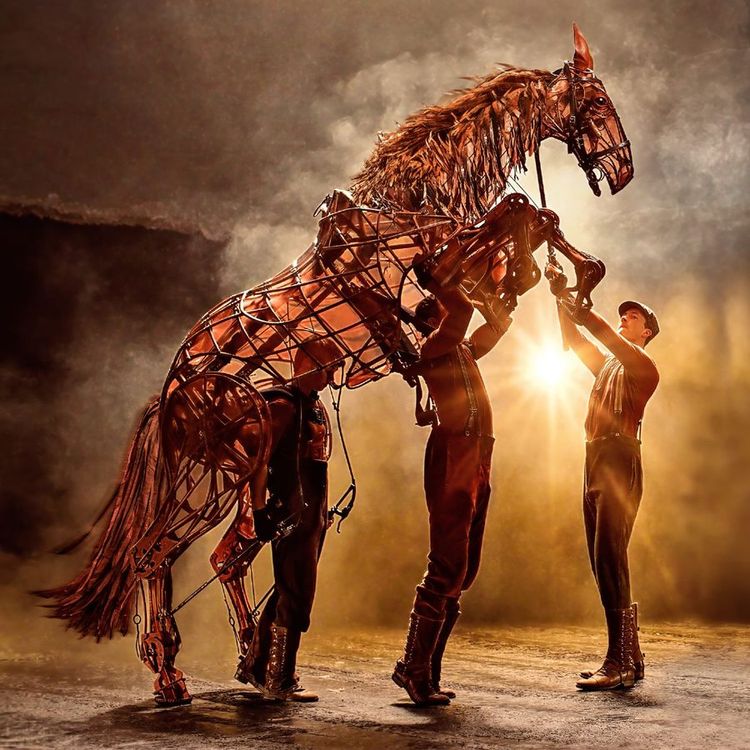
After I emotionally recovered from sobbing my way through the second half, I realised I had a lot of questions about the plain facts of the war. Why were the British involved? How many died? Who had the tanks? What kind of people were voluntarily signing up to fight? Why was the war necessary? What kind of gas makes people temporarily blind? Why didn’t the British have machine guns?
Trying to fill the gaping hole, I went looking for biographies and historical novels that would give me both broad overviews of the war and accurate personal accounts of what it was like to be in the trenches. Claude was an excellent source of recommendations here and suggested the classics Goodbye to All That, Birdsong, and All Quiet on the Western Front :
Forgive me for being parochial, but I naturally gravitated toward British stories first and picked Robert Graves’ biography Goodbye to All That, widely considered a canonical account of our side of the war. But it mostly taught me that rampant homosexual sex among British public school boys isn’t just a long-standing cultural joke. And that after the war Graves left his wife and five children to swan around the world, hence “Goodbye to All That.” At least it paints an accurate picture of the British male response to trauma. But being only one person’s account, I didn’t get many of the broad or specific details of the war I was looking for.
But then I found In Memoriam by Alice Winn, which was the exact book I wanted. Historical fiction, but based on a broad range of primary sources and first-hand accounts. Fiction can often tell a more comprehensive and representative story of history than any single “true” account by stitching together many people’s lived experiences, then zooming out to explain the context across multiple characters.
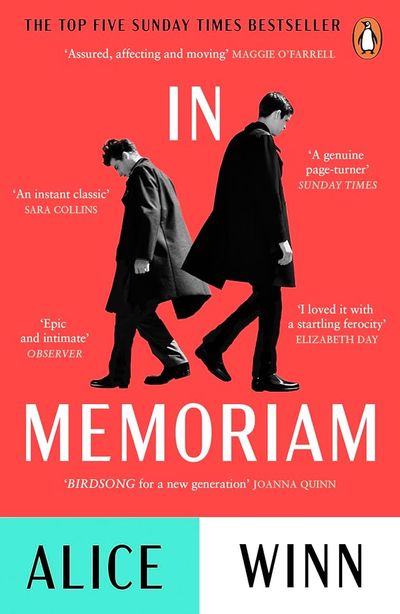
The book is lightly romance, following two boys from public school to the front as officers, navigating illegal love. But it’s more heavily horror, detailing the gory and brutal conditions of British soldiers living in deep mud, frequently sacrificed as machine gun fodder.
There are vivid images that stick with you: limbs hanging out of the sides of trenches as the sodden mud around them fails to hold the walls in place, revealing bits of bodies buried in previous battles. Soldiers hiding under stacks of rotting corpses for days in no man’s land. Mud so heavily mixed with blood and decomposing bodies that it became a uniquely pungent substance, thick enough to drown whole horses and men like quicksand. Wave after wave of men ordered over the top of trenches into walls of bullets in the Somme . Captains point-blank shooting their own soldiers, too terrified to move, to discourage cowardice. The wounded biting deep into their own arms and hands to stop from crying out, lest they give away their position or let others die attempting to save them. These kinds of details are not invented.
Listening to this story filled with pain and cruelty, while standing in my baking London house, in the middle of a brutal heatwave caused by a changing climate that will inflict catastrophic losses on the entire world, I considered how quickly we forget this level of suffering is possible. How easily it becomes acceptable. In the same way our projected 2.8°C of global warming is becoming acceptable. UN Emissions Gap Report 2025: Off Target . Current political policies put us on track for 2.8°C of warming by 2100, or optimistically 2.3-2.5 if everyone keeps their pledges. RIP the Paris Agreement.
Shortly after the battles ended, in the waterlogged fields turned to mass graves, bright red poppies came up through the bodies and mud. The shelling churned the earth enough to expose dormant poppy seeds buried deep underground. The bright light, nitrogen from the explosives, and lime from the rubble and chalky soil created ideal growing conditions for the flowers to bloom. Canadian War Museum and Smithsonian Magazine . The poppy has symbolised the war ever since.
In memoriam, here’s one poppy for every 1,000 people killed in the war.
A field of roughly 9,500 poppies, one for every 1,000 military dead in the First World War, arranged as a timeline running from August 1914 at the top to the Armistice of November 1918 at the bottom. The field is narrow at the start, widens into its greatest swell across the summer of 1916 (Verdun and the Somme), swells again through 1918, and stops abruptly at the war's end. Brighter five-petal poppies mark deaths in action; darker four-petal poppies mark deaths from disease, influenza, and other causes — roughly a third of the total.
I have only ever lived in times and places of peace and prosperity. The hardships of my great-great-grandparents who lived in those trenches feel very foreign to me. Me sitting here, MacBook Pro in hand, Aeron chair under my butt, snacking on chocolate-dipped almonds, posting about how we need better interfaces for agentic coding on Twitter. I am the furthest person from this kind of suffering.
But this book, this beautiful piece of fiction, did its job. It made the atrocities thinkable. It reminded me we are not as far as we like to imagine from mass, global, industrial-scale death. Just over a hundred years past it. Likely only a few decades from it. It’s not only climate change, but AI risk that looms ominously in my mind in these moments.
Anyway, if you’re looking to feel something, and be reminded of how bad things can be, In Memoriam is a great starting point.


